Melbourne winter 2026
Blockout Curtains vs Roller Blinds: Which Keeps Your Home Warmer?
When the temperature drops across Melbourne, your windows become the weakest link. Up to 40% of heating energy can escape through glass and frames - and the wrong window furnishing makes it worse. This guide compares blockout curtains and roller blinds for real winter warmth, explains where each wins, and shows when layering both is the smartest move.
Why Melbourne winters punish unprotected windows
Melbourne’s winter is not a single story. One week brings still, frosty mornings in the eastern suburbs; the next, a cold southerly off Port Phillip Bay drives draughts through older weatherboards in the inner north. What stays constant is physics: glass is a poor insulator, and single or even double-glazed panes lose heat far faster than insulated walls.
When your heater runs, warm air rises and meets cold glass. That temperature difference sets up convection - air cools, sinks, and pulls more warmth from the room. Bare windows also radiate heat outward on clear nights, which is why you feel a chill standing near glass even when the thermostat reads 21°C. The right blockout treatment does not replace good glazing, but it slows heat transfer and seals the psychological comfort gap: a room that feels warm at floor level, not just near the duct outlet.
Into Blinds has fitted blockout curtains and rollers across Melbourne since 2008. The homes that feel noticeably warmer in winter share three habits: treatments fitted to the opening (not floating short of the sill), fabrics chosen for density and blockout rating, and a nightly routine of closing everything before peak heating hours. Read on for how curtains and rollers compare - then book a if you want advice tailored to your windows.
Heat retention scorecard
The bars below animate on scroll to show typical winter heat retention when each option is measured and installed correctly. These are planning guides, not laboratory guarantees - your frame depth, curtain drop, and gap control all shift the result.
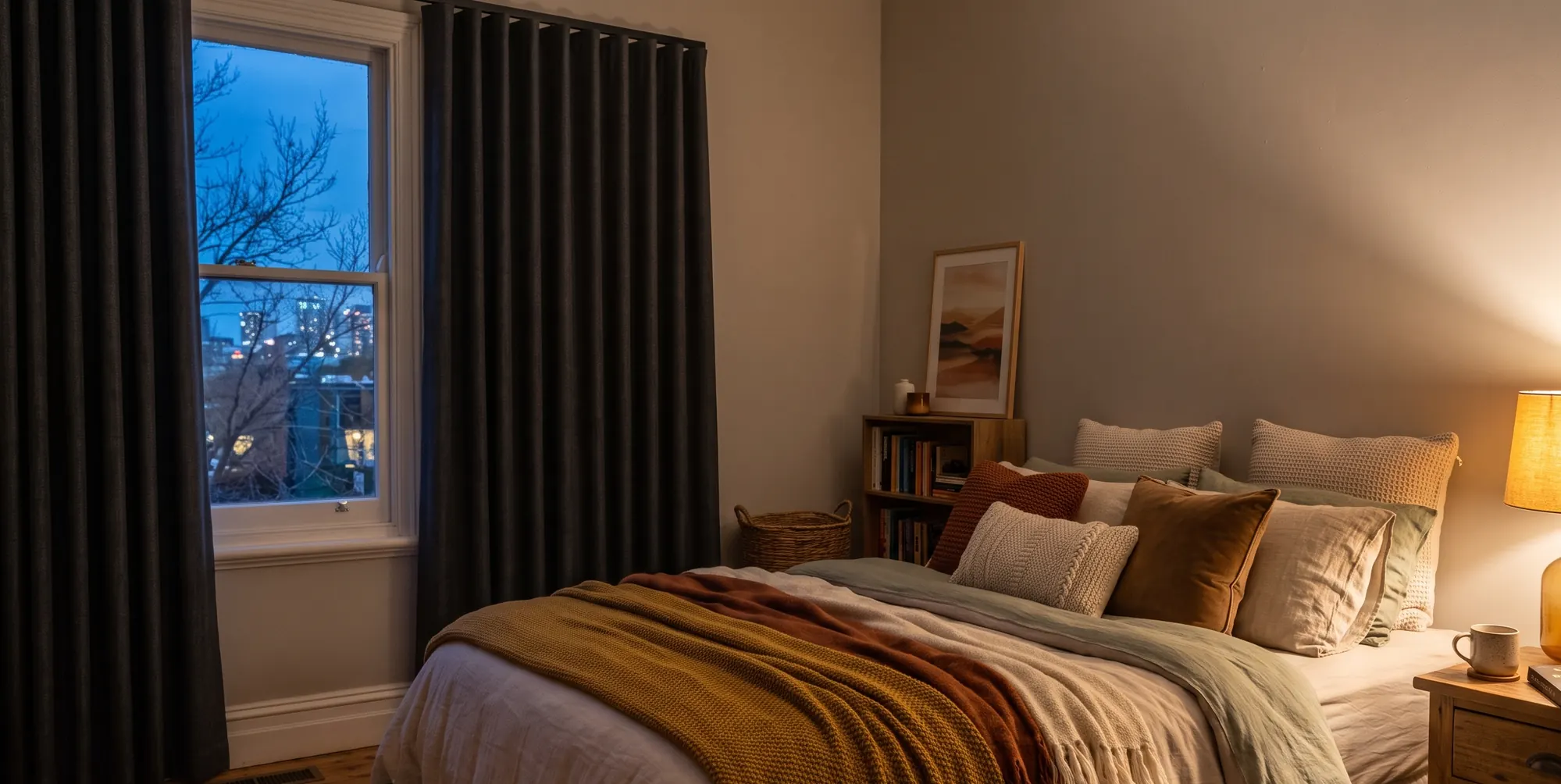
Floor-length drapes with a pelmet or face-fitted track create a trapped air pocket between fabric and glass. That still layer acts like a thin insulator and cuts down convection. Heavy triple-weave or coated blockout linings add thermal mass - the curtain absorbs less radiant chill from the pane. Score assumes curtains break on the floor (or sill with a slight break), wrap returns on the wall side, and stay closed from late afternoon through morning.
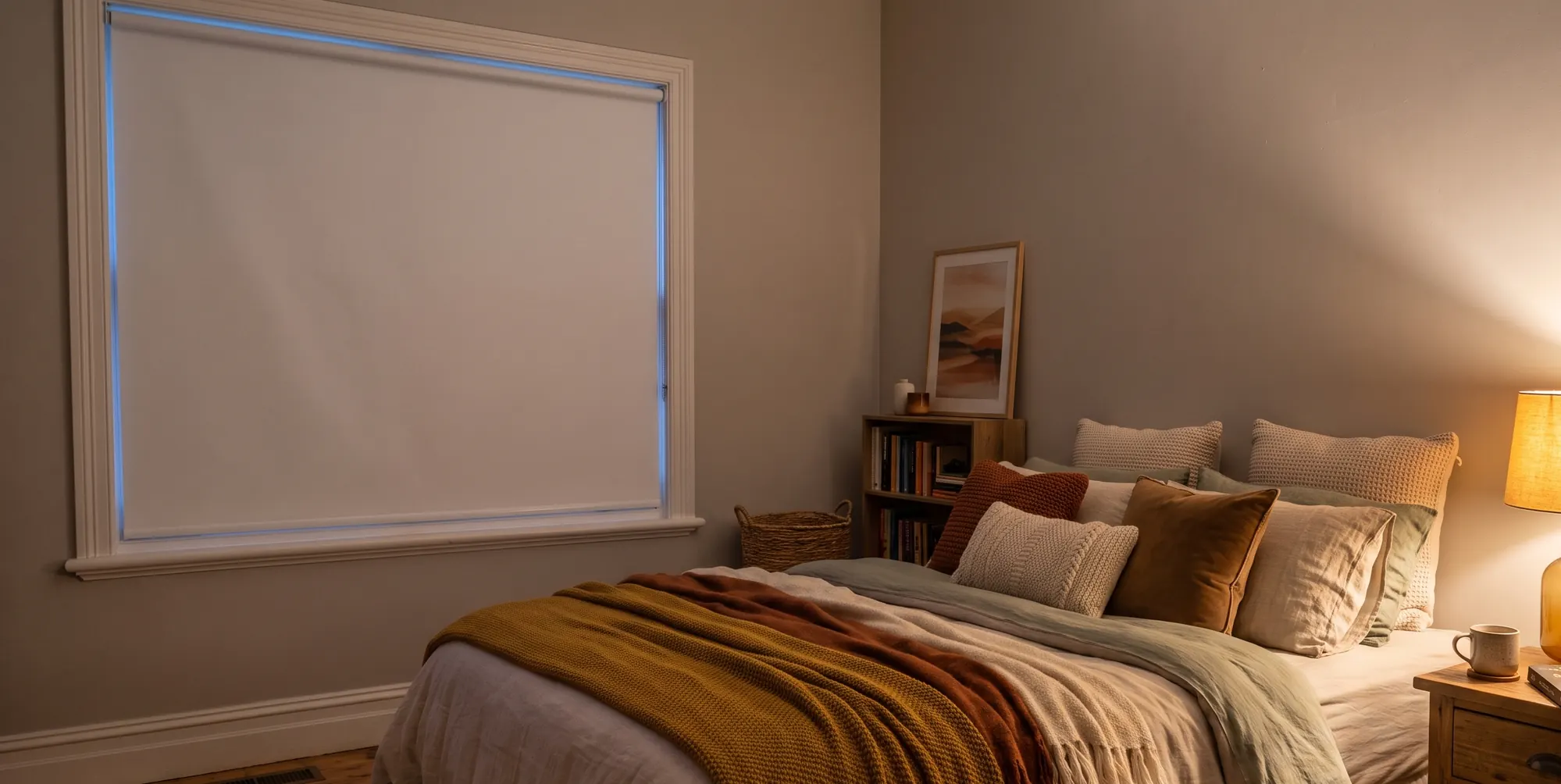
A thermal blockout roller mounted inside the reveal sits close to the glass - the best position for reflecting radiant loss back into the room. Premium blockout cloth with white thermal backing performs well on its own. The score drops when standard side channels are skipped or the barrel is face-mounted with visible light gaps. Recess fit with minimal clearance is the roller sweet spot for winter.
Layering addresses every weakness: the roller handles precise light block and sits tight to glass; the curtain adds bulk, aesthetics, and a second air gap. Popular in master bedrooms and south-facing living zones where Melbourne’s low winter sun would otherwise glare under a roller alone. Motorised rollers closing on a schedule plus hand-drawn curtains at bedtime is the most requested winter package we quote.
Deep dive: blockout curtains for warmth
Blockout curtains win winter on volume and coverage. The fabric stack is thicker than any single roller cloth, and when the leading edge meets the floor, you reduce the chimney effect that pulls cold air along the carpet. In period Melbourne homes with high ceilings, full-drop curtains also visually anchor the room - warmth you can see and feel.
Pelmet or face-fitted track
Heat escapes over the top of a curtain as readily as around the sides. A pelmet - or a ceiling-recessed track with a fascia - caps that path and improves blockout for streetlights too. For a cleaner contemporary look, face-fitted tracks with returns hide the rail and stop side bleed without a bulky box pelmet.
Floor length and break
We measure to floor minus 10–15 mm so hems clear rugs and still seal the sill zone. Puddling looks luxurious in showrooms but collects dust and lets draughts under the hem in draughty older bays - a slight break is warmer and more practical. For sill-height windows in kitchens, consider sill-touch drops with weighted hems.
Fabric weight and lining
Not all blockout is equal. Look for true blockout ratings (not dim-out) and bonded thermal lining on living-room facing streets. Sheers paired inside blockout are fine for daytime privacy, but close the blockout layer fully at night - the sheer alone offers almost no winter benefit.
Deep dive: blockout roller blinds
Roller blinds trade fabric bulk for precision. Mounted correctly, they cover the glass with minimal stackback - ideal for bedrooms with bedside tables tight to the wall, home offices beside built-ins, and rental updates where curtains are not an option.
Recess fit vs face mount
Inside the window reveal, the cloth runs closer to the pane and the channel hardware hides at the jambs. Face mount suits shallow reveals or crank handles that foul an inside fit, but you will see more perimeter light - and feel more edge chill on frosty mornings. Your consultant templates obstructions before quoting so the winter performance you expect matches the mount type we can actually install.
Thermal blockout cloth
Choose blockout or blackout-rated fabric with a white thermal backing. It reflects radiant heat back into the room and helps in summer too. Screen or light-filtering rollers are excellent for daytime glare but should not be your only layer if winter warmth is the goal - see our blackout blinds range for dedicated sleep and insulation cloth.
Side gaps and bottom finish
A roller is only as warm as its tightest edge. Factory side channels, bottom-rail bumpers, and correct width so the cloth does not rub the channel all reduce the micro-gaps that leak light - and cold air. This is where cheap online blinds often fail Melbourne winter: correct width is a millimetre game learned on site, not guessed from a tape measure at the kitchen table.
The hidden problem: side gaps
Daylight leaking beside a roller is the obvious tell. What costs you more in winter is the cold air pathway you cannot always see: gaps as narrow as 3–5 mm along one jamb can feel like a permanent draught at pillow height. Even premium fabric fails when the hardware does not close the perimeter.

How professional installers fix it
- →Measure in three places - width at top, middle, and sill; reveals are rarely square in pre-war terraces.
- →Side channels - aluminium or PVC channels capture the cloth edge and cut light bleed; essential for bedrooms.
- →Correct deduction - cloth width calculated from bracket type so the fabric runs freely without bowing out of the channel.
- →Bottom bar seal - bumpers or floor guides on large sliders stop the hem flapping and pulling cold air under.
What you can check today
Close the blind at night, switch off the room lights, and look for glow at the edges. Run your hand slowly along each jamb - a noticeable temperature drop means air is moving. For curtains, check the leading edge overlaps the wall by at least 100 mm and that the pelmet or track has no open gap above the heading.
If gaps persist after adjustment, replacement with made-to-measure hardware beats fighting ill-fitting retail sizes. That is the single biggest upgrade short of new glazing.

The ultimate winter setup: layer both
Think of layering as assigning each treatment a job. The blockout roller handles daytime privacy, glare from low west sun, and tight glass contact. The blockout curtain adds evening theatre, acoustic softening, and that second air barrier when Melbourne nights turn properly cold.
A practical routine: motorised roller closes at 4:30 pm before you get home; curtains draw after dinner and stay closed until morning sun is welcome. Homeowners with honeycomb blinds on other windows often match the roller here for a consistent look - honeycomb cells insulate well on their own, but the roller-plus-curtain combo still wins on large bedroom openings.
Budget tip: stage the project - rollers first for immediate blockout and gap control, curtains six months later when fabric samples are decided. We quote both in one visit so you can plan either way.
Room-by-room recommendations
Melbourne homes mix orientations in a single floor plan. Use this as a starting point - your consultant will adjust for glare, furniture, and frame depth on site.
Bedroom
Priority: sleep + warmth
Best overall: recess-fit blockout roller with side channels, plus floor-length curtains on a face-fitted track. South and west bedrooms in Brunswick, Brighton, and the hills suburbs benefit most. If space is tight, a single blackout roller with channels beats short ready-made curtains that hover above the sill.
Living room
Priority: comfort + style
Large openings and street-facing bays suit blockout curtains with pelmets - the visual warmth matches the thermal benefit. Pair with a sheer for daytime. Where stackback would block a heat pump or artwork, consider dual rollers (blockout + screen) instead of curtains; motorisation keeps daily closing realistic.
Home office
Priority: glare + focus
Recess roller blinds win on depth: they sit behind desks and bookcases without encroaching floor space. Blockout cloth cuts screen glare from low winter sun on east-facing studies. If the room doubles as a guest bedroom, add a curtain on a slim track for weekend warmth without changing the weekday aesthetic.
Frequently asked questions
Warm up your home before spring power bills hit
Free measure and quote across Melbourne. We bring blockout samples, check your reveals for gap risk, and price curtains, rollers, or both in one visit - no obligation.
Ready for blockout window furnishings? Free measure & quote across Melbourne.